There are seasons when the future feels genuinely unclear. A job falls through. A relationship breaks. A diagnosis changes everything. And somewhere in the middle of that uncertainty, someone shares Jeremiah 29:11 with you—often on a greeting card, a social media post, or a framed print on a wall. The verse is everywhere. But the deeper you look at it, the more you realize it carries something far richer than its popular use suggests.
Today’s Bible Verse
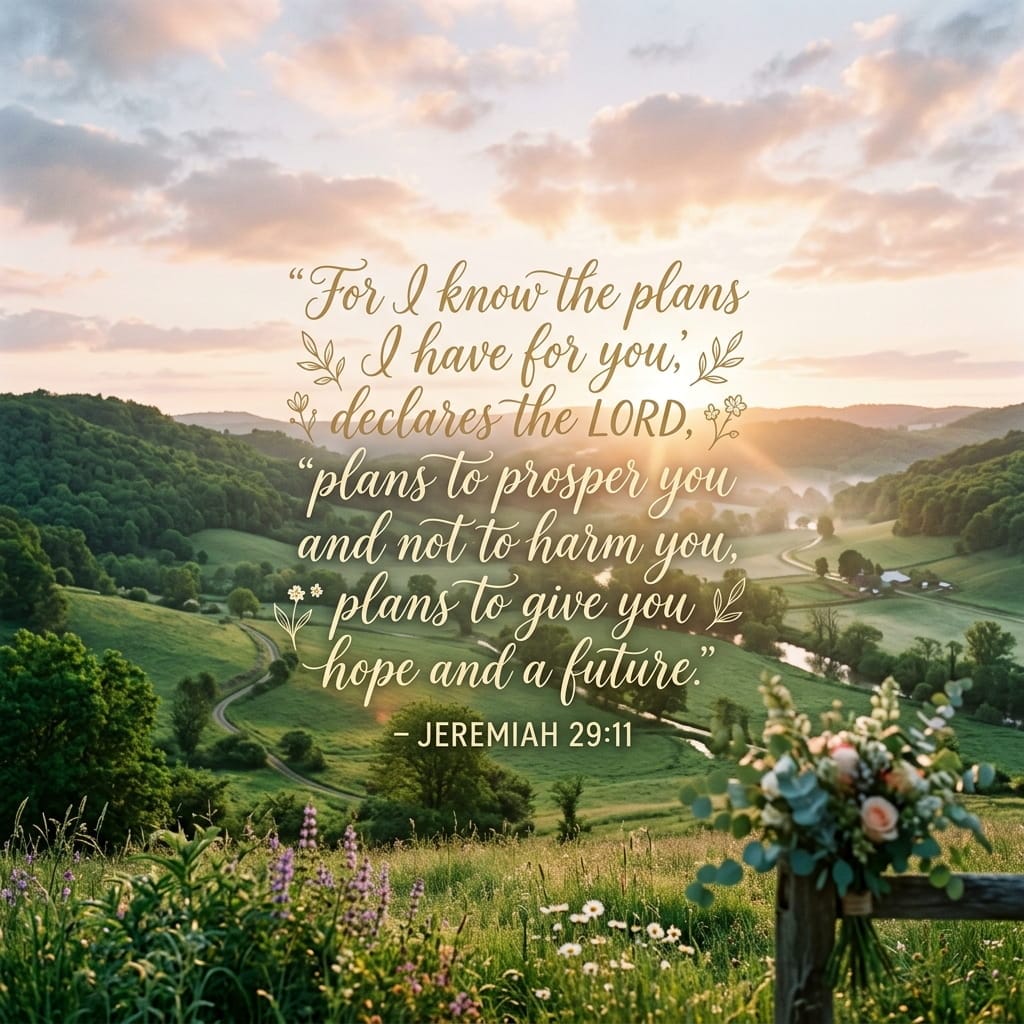
“For I know the plans I have for you, declares the Lord, plans to prosper you and not to harm you, plans to give you hope and a future.”
— Jeremiah 29:11 (NIV)
Understanding What This Verse Actually Says
The verse opens with God speaking in the first person: “I know the plans I have for you.” That word know carries weight. It isn’t casual awareness—it suggests intimate, deliberate knowledge. God isn’t improvising. The plans already exist.
The Hebrew word translated “plans” here is machashavot, which conveys purposeful thought or intention. These aren’t vague wishes—they reflect an active, considered purpose. The phrase “to prosper you” translates the Hebrew shalom, a word that means far more than material well-being. Shalom carries the sense of wholeness, peace, completeness—a life that is right and whole in the deepest sense.
And then the promise closes with “hope and a future”—which in Hebrew is tiqvah, meaning expectation, a cord of hope, something to hold on to.
What God describes here isn’t a guarantee of comfort. It’s a declaration of intention rooted in His character.
The Biblical Context Behind Jeremiah 29:11
To understand what this verse means, you have to understand where it comes from—because the setting changes everything.
The prophet Jeremiah wrote these words in a letter addressed to Jewish exiles living in Babylon. In approximately 597 BC, King Nebuchadnezzar had besieged Jerusalem and deported a significant portion of the population. These were not fringe members of society. Priests, elders, craftsmen, and leaders had been taken far from home and forced to live in a foreign empire.
False prophets at the time were telling the exiles what they wanted to hear—that their captivity would be short, that God would bring them home quickly. Jeremiah’s letter delivered the opposite message. He told them to settle in Babylon, build houses, plant gardens, raise families, and seek the peace of the city where they were sent. In other words: this is going to take longer than you hope.
Then came the timeline: “When seventy years are completed for Babylon, I will come to you and fulfill my good promise to bring you back to this place” (Jeremiah 29:10, NIV).
Verse 11 follows directly from that context. The plans for hope and a future weren’t going to be realized next month. Many of the original exiles would not live to see them fulfilled. God was speaking a promise that stretched beyond the immediate moment—one that required trust across decades.
That context isn’t a reason to dismiss the verse. It’s a reason to take it more seriously.
What Jeremiah 29:11 Means for Us Today
It would be a mistake to read this verse as a personal guarantee that your specific plans will succeed, that your health will be restored, or that your circumstances will turn around quickly. That’s not what Jeremiah was saying to the exiles—and it wouldn’t be faithful to apply it that way today.
What the verse does offer is something steadier: the assurance that God’s intentions toward His people are good, even when the present moment is hard.
Consider three situations where this distinction matters.
When waiting feels like abandonment. Someone navigating years of infertility, chronic illness, or financial instability may feel forgotten. Jeremiah 29:11 doesn’t promise a quick resolution. What it affirms is that God’s purposes haven’t collapsed. The exiles waited seventy years. Their wait wasn’t evidence that God had forgotten them.
When circumstances look like the opposite of blessing. The exiles were told to settle in a foreign land—not to resist, not to wait in frozen anticipation, but to live fully where they were. The “plans for a future” didn’t exempt them from difficulty. They were invited to plant gardens in Babylon. There’s something honest and humbling in that image. Faithfulness often happens in ordinary, unglamorous soil.
When someone else seems to be getting the outcome you prayed for. It’s easy to read Jeremiah 29:11 and wonder why someone else’s situation improved while yours hasn’t. The verse was written to a community, not just an individual. God’s purposes are woven across generations and circumstances in ways that rarely match our immediate expectations.
A Short Reflection
What strikes many careful readers of Jeremiah 29 is how much God asked of the exiles before the promise was fulfilled. He didn’t say: hold on, escape, endure. He said: live. Build. Plant. Pray for the city. The hope He offered wasn’t escapism—it was the kind of trust that allows you to be present and faithful exactly where you are.
There’s a difference between clinging to a verse because it makes you feel better and actually resting in what it says. Jeremiah 29:11 is an invitation to the second kind of faith—the kind that doesn’t require an immediate answer to believe that God is good.
Questions for Personal Reflection
- Is there an area of your life where you’re struggling to trust that God’s purposes are good—not because you doubt Him in general, but because this particular situation feels unresolved?
- The exiles were told to invest in Babylon, even though it wasn’t their home. Is there a situation you’ve been mentally avoiding or resisting because you’re waiting for circumstances to change first?
- What would it look like for you to hold onto the hope of Jeremiah 29:11 not as a quick promise, but as a long-term declaration of God’s character?
A Prayer Based on Jeremiah 29:11
Lord, I don’t always understand where things are heading. Some seasons feel longer than I expected, and the waiting is harder than I anticipated. Thank You that Your plans aren’t shaped by my timeline. Thank You that shalom—wholeness, peace, restoration—is what You intend for Your people. Help me to live faithfully where I am today, not paralyzed by what I can’t see. Give me the kind of hope that doesn’t require everything to make sense right now. I trust that You know what You’re doing.
Amen.
Today’s Takeaway
God’s plans for you are rooted in His character, not your circumstances. When today feels uncertain, let Jeremiah 29:11 be less a quick comfort and more a steady anchor—a reminder that the God who spoke to exiles in Babylon still speaks, still intends good, and is not finished.
Return to this verse once more today, slowly. Let the words settle rather than rush past them.
Related Christian Prayer Daily Resources
If Jeremiah 29:11 has stirred something in you today, you may also find encouragement in these resources from Christian Prayer Daily:
- A Prayer for Trusting God in Uncertain Times — for those navigating seasons where the path forward isn’t clear
- What Does It Mean to Wait on God? — a reflection on biblical waiting, patience, and active faith
- Prayers for Hope When Life Feels Hard — a collection of Scripture-rooted prayers for difficult seasons