
Maybe you know this feeling. Someone in your small group prays over strangers, shares words of encouragement that seem to speak directly to people’s struggles and moves through life with remarkable spiritual boldness. And you? You show up every week. You bring food for others, remember people’s prayer requests from months ago, follow up when someone is struggling, and listen patiently when a friend needs someone to talk to.
At some point, you start wondering: Am I even doing this right? Are they more spiritual than me? Why do some believers seem to have extraordinary spiritual abilities while others quietly serve without drawing attention?
That tension is exactly why understanding the difference between the fruit of the Spirit and spiritual gifts matters so much.
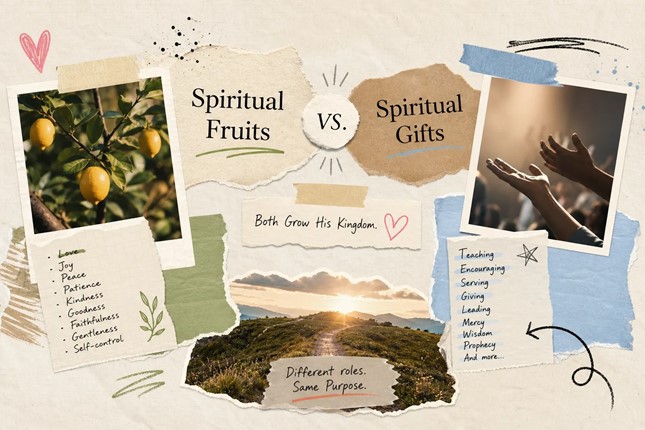
The fruit of the Spirit describes the character the Holy Spirit develops within believers. Spiritual gifts are abilities given by God’s grace to help believers serve others and strengthen the church. One concerns who you are becoming; the other concerns how you are equipped to serve.
Both are necessary, but they are not the same thing.
This article explores what the Bible teaches about the fruit of the Spirit, how spiritual gifts differ, what all nine qualities look like in everyday life, and how you can intentionally grow in Christian character. Whether you are new to faith or have been following Christ for many years, understanding these biblical principles can help you approach spiritual growth with greater confidence and purpose.
What the Bible Actually Means by the Fruit of the Spirit
Paul explains the fruit of the Spirit in Galatians 5:22-23. He identifies nine qualities: love, joy, peace, patience, kindness, goodness, faithfulness, gentleness, and self-control.
One detail worth noticing is that Paul uses the singular word fruit rather than fruits. He is describing the unified character produced by the Holy Spirit, expressed through nine closely connected qualities.
Think about a healthy fruit tree. Its branches do not independently decide to produce different kinds of fruit. The fruit grows because the tree is alive, properly rooted, and receiving what it needs to flourish. In a similar way, Christian character develops through an ongoing relationship with God.
Jesus illustrates this principle in John 15:5, where He describes Himself as the vine and His followers as the branches. Remaining connected to Him is essential for producing spiritual fruit.
This is an important distinction because spiritual growth is not simply about trying harder to become a better person. It is about allowing the Holy Spirit to transform your attitudes, decisions, relationships, and everyday behavior.
You cannot manufacture genuine spiritual fruit through willpower alone. You can practice patience, choose kindness, and develop healthier habits, but lasting spiritual transformation comes through your relationship with Christ and dependence on the Holy Spirit.
The Nine Fruits of the Spirit Explained
Understanding the nine qualities becomes easier when you connect each one to ordinary experiences. These are not abstract religious ideas. They influence how you treat people, respond to challenges, manage emotions, and make decisions.
1. Love
Love means genuinely seeking another person’s good, even when doing so requires sacrifice.
It is more than affection or positive feelings. As Paul explains in 1 Corinthians 13:4-7, love involves patience, kindness, humility, forgiveness, and perseverance.
In everyday life, love might mean helping someone who cannot repay you, forgiving a person who has hurt you, or making time for someone who feels forgotten.
2. Joy
Joy is a deep sense of gladness rooted in God’s faithfulness rather than changing circumstances.
It does not mean pretending that life is always wonderful or ignoring difficult emotions. Christians experience disappointment, grief, uncertainty, and hardship too.
However, joy provides a deeper foundation that remains even when circumstances are difficult.
Philippians 4:4 encourages believers to rejoice in the Lord. This kind of joy grows from knowing that God’s presence and promises are not dependent on everything going according to plan.
3. Peace
Peace is an inner steadiness that comes from trusting God and extends into your relationships with others.
It does not mean avoiding every disagreement or pretending that problems do not exist.
Imagine two family members who strongly disagree about an important decision. Instead of shouting, blaming, or walking away in anger, they choose to listen, speak respectfully, and work toward understanding.
That is one practical expression of peace.
Jesus speaks about the peace He gives in John 14:27, describing something deeper than the temporary sense of security the world offers.
4. Patience
Patience is the ability to endure difficult situations and challenging relationships without immediately reacting with anger or frustration.
It might mean remaining calm when someone repeatedly makes the same mistake, waiting for an important decision without becoming consumed by anxiety, or showing understanding toward someone who is struggling.
Patience does not mean accepting harmful behavior without boundaries. It means responding thoughtfully rather than allowing frustration to control your actions.
Ephesians 4:2 connects patience with humility, gentleness, and bearing with one another in love.
5. Kindness
Kindness is compassion expressed through practical action.
It can be as simple as checking on a friend who has been unusually quiet, helping a stranger who needs directions, or offering encouragement to someone who feels overlooked.
Ephesians 4:32 encourages believers to be kind, compassionate, and forgiving toward one another.
True kindness is not limited to people who are friendly toward you. It is often most meaningful when extended to someone who cannot offer anything in return.
6. Goodness
Goodness goes beyond being pleasant or avoiding wrongdoing. It involves actively choosing what is right and beneficial.
Consider an employee who discovers a colleague has made a serious mistake. Instead of using the opportunity to embarrass that person or gain an advantage, they help correct the problem.
That is goodness expressed through integrity and concern for others.
Goodness influences the decisions you make when nobody is watching and when doing the right thing is inconvenient.
7. Faithfulness
Faithfulness means being dependable, loyal, and consistent in your relationship with God and other people.
It is often demonstrated through small commitments rather than dramatic moments.
Think about the friend who continues visiting someone going through a difficult illness, even months after the initial excitement and attention from others have disappeared.
Luke 16:10 highlights the importance of being faithful in small responsibilities.
Faithfulness means your words and actions gradually become consistent. People learn that they can depend on you because you follow through on your commitments.
8. Gentleness
Gentleness is strength expressed through humility, consideration, and self-restraint.
It is not weakness, timidity, or an inability to stand up for what is right.
Imagine a teacher correcting a student’s inappropriate comment. Instead of humiliating the student in front of everyone, the teacher addresses the behavior firmly while preserving the student’s dignity.
That is gentleness.
Matthew 11:28-30 provides an important picture of the gentle character of Jesus. His gentleness demonstrates that strength and compassion can exist together.
9. Self-Control
Self-control is the ability to manage desires, emotions, speech, and reactions rather than allowing impulses to dictate behavior.
It might mean deciding not to send an angry message, stepping away from an unnecessary argument, resisting a temptation, or choosing discipline over immediate gratification.
Proverbs 25:28 compares a person without self-control to a city whose protective walls have been broken down.
Self-control helps protect your relationships, decisions, and spiritual life. It is not simply human determination but a quality that grows through dependence on the Holy Spirit.
Spiritual Fruits vs. Spiritual Gifts: Understanding the Difference
The fruit of the Spirit and spiritual gifts are both important aspects of Christian life, but Scripture presents them with different purposes.
Spiritual gifts, often described using the Greek word charismata, are abilities given through God’s grace for serving others and strengthening the church.
Paul discusses these gifts in 1 Corinthians 12 and Romans 12. Examples include teaching, prophecy, serving, encouragement, leadership, generosity, administration, healing, and speaking in different kinds of tongues.
Not every believer has the same gift. Paul uses the picture of a human body to explain why this diversity is necessary. Different parts have different functions, but they all contribute to the well-being of the whole body.
The fruit of the Spirit operates differently.
The nine qualities in Galatians 5:22-23 describe the Christlike character that believers are called to develop through the Holy Spirit. They are not individual ministry assignments distributed to different people.
Every Christian is called to grow in love, patience, kindness, faithfulness, and the other qualities.
Here is a simple comparison:
| Spiritual Fruit | Spiritual Gifts |
|---|---|
| Develops Christlike character | Equips believers for ministry |
| Describes how you are becoming | Describes how you are equipped to serve |
| Includes nine interconnected qualities | Includes different abilities and forms of service |
| Every believer is called to grow in these qualities | Gifts differ among believers |
| Evident through attitudes and everyday behavior | Often expressed through serving and building up others |
| Described in Galatians 5:22-23 | Discussed in 1 Corinthians 12 and Romans 12 |
A person may have a gift for preaching and still struggle with patience or kindness. Another believer may never preach to a large congregation but consistently demonstrate remarkable gentleness, faithfulness, and compassion.
Neither situation should be used to measure someone’s worth or standing before God.
The two are meant to work together: spiritual gifts should be exercised through Spirit-formed character.
Paul makes this especially clear in 1 Corinthians 13:1-3. He explains that even extraordinary spiritual expressions are meaningless without love.
In other words, having a spiritual gift does not automatically mean that someone has developed spiritual maturity.
Why Confusing Spiritual Gifts with Spiritual Fruit Can Be Dangerous
When churches place too much emphasis on visible spiritual gifts while neglecting character, charisma can become more important than integrity.
A person may be an impressive speaker, have a strong ministry presence, or demonstrate an ability to encourage others publicly. Yet those abilities do not automatically establish that the person is patient, humble, loving, or faithful in private life.
The opposite problem can also occur.
When believers focus only on developing personal character while ignoring their responsibility to serve others, the church loses the diversity of ministry that God provides through different gifts.
Spiritual growth should involve both.
We should desire to become more Christlike while also discovering how God can use our abilities to serve others.
What Spiritual Gifts Does the Bible Mention?
The New Testament discusses several spiritual gifts, particularly in 1 Corinthians 12, Romans 12, and Ephesians 4.
Some examples include:
- Teaching: Explaining biblical truth and helping others understand Scripture.
- Prophecy: Communicating a message or encouragement understood as coming through the Holy Spirit, according to the relevant biblical context.
- Serving: Meeting practical needs and supporting others.
- Encouragement: Strengthening people through words, guidance, and support.
- Giving: Sharing resources generously to help others.
- Leadership: Guiding and organizing people toward a shared purpose.
- Mercy: Showing compassion to people experiencing suffering or hardship.
- Administration: Helping organize and coordinate the work of the church.
- Healing: Ministering to those who are sick or suffering through prayer and dependence on God.
- Wisdom and knowledge: Providing insight and understanding that help others make godly decisions.
- Faith: Demonstrating confidence and trust in God in challenging circumstances.
- Speaking in tongues and interpretation: Spiritual expressions discussed in 1 Corinthians 12-14.
Christian traditions differ in how they understand certain gifts, particularly whether gifts such as prophecy, healing, and tongues continue in the same way today.
Some churches believe all the gifts described in the New Testament remain available to believers. Others believe certain gifts had a specific purpose during the early church period. There are also churches that hold positions between these perspectives.
Regardless of these differences, Christians can agree that spiritual gifts should serve others, build up the church, and be exercised in a manner consistent with biblical teaching.
First Corinthians 12:7 emphasizes that the manifestation of the Spirit is given for the common good.
The purpose of spiritual gifts is not personal recognition or spiritual competition. It is service.
What Each of the Nine Fruits Looks Like in Everyday Life
The fruit of the Spirit does not appear only during church services, prayer meetings, or Christian conferences.
It becomes visible in grocery stores, workplaces, family conversations, difficult relationships, and everyday decisions.
Let’s look at how these qualities influence ordinary life.
The Inner Fruits: Love, Joy, and Peace
Love, joy, and peace shape your relationship with God and influence your inner life.
Love might mean choosing forgiveness when someone disappoints you. It might mean putting aside your own convenience to support a family member who needs help.
Joy might mean finding reasons to remain grateful even when a financial difficulty or personal disappointment makes life uncomfortable.
Peace might mean refusing to allow an argument to destroy a relationship that matters to you.
Consider two neighbors who strongly disagree about an important community issue. Instead of allowing the disagreement to become personal, they listen, speak respectfully, and remain committed to treating each other with dignity.
Their opinions may not change, but their relationship does not have to suffer.
That is peace working in real life.
The Relational Fruits: Patience, Kindness, Goodness, and Gentleness
These qualities become particularly visible when relationships are tested.
Patience looks like remaining calm when a family member makes the same mistake again or when someone takes longer than expected to complete a task.
Kindness looks like checking on an elderly neighbor, helping someone who is struggling, or offering encouragement to a person who feels alone.
Goodness looks like admitting a mistake even when nobody would have discovered it, or helping a colleague correct an error instead of taking advantage of the situation.
Gentleness looks like correcting someone without humiliating them, listening without interrupting, and expressing disagreement without attacking the other person’s character.
These qualities can transform ordinary relationships.
You may never know how much a patient response, a kind word, or a gentle correction means to someone else. But those small actions can make a lasting difference.
The Steadiness Fruits: Faithfulness and Self-Control
Faithfulness and self-control help believers remain consistent through changing circumstances.
Faithfulness might look like continuing to pray for someone who is struggling, keeping a promise when it becomes inconvenient, or supporting a friend long after others have moved on.
Self-control might mean typing an angry response, choosing not to send it, and taking time to consider your words before responding.
It might also involve controlling unnecessary spending, resisting harmful habits, or choosing not to participate in gossip.
These decisions may seem small, but they reveal something important about spiritual maturity.
The fruit of the Spirit is not measured only by what happens during major life events. It is often revealed through the choices you make when nobody is paying attention.
Practical Habits That Help You Grow the Fruit of the Spirit
Spiritual growth requires more than simply knowing the nine qualities by name.
You can memorize Galatians 5:22-23 and still struggle to demonstrate patience when someone frustrates you. You can read about kindness and still find it difficult to forgive someone who has hurt you.
The goal is to move from understanding these qualities to practicing them through your daily relationship with God.
Here are four practical habits that can help.
1. Begin Your Day with an Intention Prayer
Choose one quality you want to practice throughout the day.
For example, if patience is something you struggle with, begin your morning with this prayer:
“Father, teach me to wait for Your timing today. Help me remain patient with others and remember the patience You have shown me. Guide my words, my thoughts, and my reactions. Amen.”
Then identify one situation where you are likely to become frustrated.
It could be a difficult conversation, a demanding responsibility, or a situation that requires waiting.
Instead of viewing that moment as an interruption, treat it as an opportunity to practice patience.
2. Practice Evening Reflection
At the end of the day, spend five minutes reflecting on your actions.
Ask yourself:
- Where did I demonstrate faithfulness today?
- Did I respond with kindness when someone needed me?
- Was I patient when something did not go according to plan?
- Did I allow frustration or anger to control my words?
- What could I approach differently tomorrow?
This is not about creating unnecessary guilt.
It is about becoming more aware of your decisions and allowing God to guide your growth.
3. Practice Active Listening
Choose one conversation each day where you give the other person your full attention.
Put your phone aside, avoid interrupting, and allow them to finish expressing their thoughts.
Before offering advice, make an effort to understand what they are experiencing.
Sometimes people do not need immediate solutions. They simply need someone who is willing to listen.
This small practice can help develop kindness, gentleness, patience, and love.
4. Develop a Habit of Gratitude
Each evening, identify three specific things you are grateful for.
Avoid general statements such as “I am grateful for everything.”
Instead, identify something meaningful from your actual day.
Perhaps someone offered you unexpected encouragement, a difficult conversation ended peacefully, or you had the opportunity to help someone.
Gratitude helps redirect your attention toward God’s goodness, even when life is not perfect.
A Simple 30-Day Plan to Grow in the Fruit of the Spirit
Understanding the fruit of the Spirit is important, but putting these qualities into practice is where meaningful growth begins.
This 30-day plan provides a simple structure for developing all nine qualities.
You do not need to spend hours each day completing it. A few minutes of prayer, Scripture reading, and intentional reflection can help you become more aware of how you respond to everyday situations.
Week 1: Growing in Love, Joy, and Peace
Focus on the three qualities that shape your relationship with God and influence your inner life.
Love
Read 1 Corinthians 13:4-7.
Identify one person you can encourage, forgive, or support this week.
Joy
Read Philippians 4:4.
Each evening, write down three specific things you are grateful for. Practice recognizing God’s goodness even during difficult days.
Peace
Read Philippians 4:6-7 and John 14:27.
When anxiety or frustration arises, pause and pray before reacting. Bring your concerns to God rather than allowing them to consume your thoughts.
Suggested prayer:
“Heavenly Father, help me grow in love, joy, and peace. Teach me to love others as You have loved me, remain grateful in every season, and trust You when life feels uncertain. Let Your presence guide my thoughts and decisions. Amen.”
Week 2: Developing Patience and Kindness
Focus on how you respond to other people, particularly when situations become uncomfortable.
Patience
Read Ephesians 4:2.
Identify one situation where you frequently become impatient. Practice responding calmly rather than reacting immediately.
Kindness
Read Ephesians 4:32.
Perform one intentional act of kindness each day. It could be helping someone, offering encouragement, or checking on a person who may be struggling.
Suggested prayer:
“Lord, help me become more patient with others and more thoughtful in my words and actions. Remind me of the kindness and forgiveness You have shown me. Give me opportunities to make someone’s day a little easier. Amen.”
Week 3: Practicing Goodness and Faithfulness
Focus on consistency, integrity, and doing what is right even when nobody is watching.
Goodness
Read Galatians 6:9-10.
Look for an opportunity to do something genuinely helpful without expecting recognition or a reward.
Faithfulness
Read Luke 16:10.
Identify one commitment you have neglected. Make a deliberate effort to follow through.
Suggested prayer:
“Father, help me choose what is right even when it is difficult. Teach me to remain faithful in small responsibilities and to serve others with sincerity. Let my actions reflect Your goodness in my everyday life. Amen.”
Week 4: Growing in Gentleness and Self-Control
Focus on how you manage your reactions, emotions, and interactions with others.
Gentleness
Read Matthew 11:28-30 and Galatians 6:1.
Practice correcting others with humility and compassion. Remember that honesty does not require harshness.
Self-Control
Read Proverbs 25:28 and Titus 2:11-12.
Identify one habit, reaction, or temptation that regularly creates difficulties in your life. Develop a practical boundary that helps you respond more thoughtfully.
Suggested prayer:
“Holy Spirit, help me become gentle in my words and disciplined in my actions. Give me strength to control my reactions, resist temptation, and respond with wisdom. Help me reflect the character of Christ in everything I do. Amen.”
At the End of 30 Days: Reflect on Your Growth
When you complete the plan, spend some time reviewing your experience.
Ask yourself:
- Which quality was easiest for me to practice?
- Which quality challenged me the most?
- Have my relationships changed in any way?
- Am I becoming more thoughtful in my reactions?
- What do I want to continue practicing over the next 30 days?
Write down one area of progress, one area that needs attention, and one practical commitment for the coming month.
Remember, the goal is not flawless performance.
The fruit of the Spirit develops through an ongoing relationship with God. Some changes may become noticeable quickly, while others require patience, prayer, and consistent dependence on the Holy Spirit.
You are not trying to earn God’s love through perfect behavior. You are learning to live in response to the grace you have already received.
Frequently Asked Questions About Spiritual Fruits and Spiritual Gifts
Can a believer have some fruits of the Spirit but not others?
Every believer is called to grow in all nine qualities described in Galatians 5:22-23.
However, spiritual growth is gradual. Someone may naturally demonstrate patience but struggle with self-control. Another person may be generous and kind but find it difficult to remain peaceful during stressful situations.
These differences do not mean that certain qualities can be ignored.
They remind us that Christian maturity is an ongoing process of transformation through the Holy Spirit.
Is growing in spiritual fruit the same as being a good person?
No.
People from different backgrounds and belief systems can demonstrate kindness, patience, generosity, and compassion.
However, the fruit of the Spirit specifically describes the character the Holy Spirit develops in those who follow Christ.
It is not simply about becoming a morally better person through discipline or good intentions. It is about transformation through a relationship with God.
How do I know if I am actually growing spiritually?
Look for patterns over time rather than expecting dramatic changes overnight.
Are you becoming slower to anger? Do you find it easier to forgive? Are you more patient with family members? Do you think more carefully before speaking?
You may also notice that people closest to you recognize changes in your behavior before you do.
Spiritual growth is often revealed through small, consistent changes in everyday life.
What is the difference between the gifts of the Holy Spirit and the fruit of the Spirit?
The gifts of the Holy Spirit are abilities given to believers to serve others and strengthen the church. Examples include teaching, encouragement, leadership, prophecy, and serving.
The fruit of the Spirit describes the character that develops in believers through the Holy Spirit, including love, joy, peace, patience, kindness, goodness, faithfulness, gentleness, and self-control.
Gifts relate to how believers are equipped to serve. Fruit relates to the character they are called to develop.
Both are important for a healthy Christian life.
Are spiritual gifts more important than the fruit of the Spirit?
Spiritual gifts and spiritual fruit serve different but complementary purposes.
Gifts help believers contribute to the church and serve others. Spiritual fruit reflects the character that should shape how those gifts are used.
First Corinthians 13:1-3 makes it clear that even extraordinary spiritual abilities have no meaningful value when exercised without love.
A healthy Christian life should not pursue spiritual gifts while neglecting spiritual maturity.
Can I develop the fruit of the Spirit through prayer alone?
Prayer is essential for spiritual growth, but it is not the only part of the process.
Growing in spiritual character also involves reading and applying Scripture, remaining connected to Christ, serving others, practicing forgiveness, building healthy relationships, and responding to the Holy Spirit.
Prayer helps you depend on God rather than relying entirely on your own strength.
The Person Who Shows Up Faithfully Is Doing Something Real
Remember the believer from the beginning of this article.
The person who consistently shows up, remembers other people’s struggles, brings food when someone needs help, and listens patiently while someone else demonstrates a more visible spiritual gift.
That person is doing something meaningful.
Their quiet faithfulness, consistent kindness, and willingness to serve are not insignificant. They are practical expressions of the character the Holy Spirit develops in believers.
The nine qualities Paul identifies in Galatians 5:22-23 are not reserved for pastors, church leaders, or people with extraordinary ministry abilities.
They are part of the spiritual growth every believer should pursue.
You do not need to be the most confident speaker in the room, the person who leads every prayer meeting, or the one who receives the most recognition.
You need to remain connected to Christ and allow the Holy Spirit to shape the way you live.
Spiritual gifts can create opportunities to serve others, but spiritual fruit helps ensure that your service reflects the character of Christ.
Both matter. Neither should become a reason to compare yourself with another believer.
Practical Ways to Grow in the Fruit of the Spirit Starting Today
You do not need to wait until next Sunday, the next Bible study, or the beginning of a new month to start growing spiritually.
Start with one small decision today.
Choose one quality from Galatians 5:22-23 that you want to develop. Find a Bible verse connected to it, spend a few minutes in prayer, and identify one practical way to demonstrate it.
If you want to become more patient, practice listening without interrupting.
If you want to grow in kindness, look for someone who needs encouragement.
If you want to develop self-control, pause before reacting to something that frustrates you.
If you want to grow in faithfulness, follow through on a commitment you have made.
Christian Prayer Daily offers topical Bible verses, daily devotionals, and prayer guides to help you make Scripture and prayer part of your everyday life. Explore the relevant Bible verse collections and prayer resources as you continue your spiritual journey.
Remember, fruit does not grow overnight. It develops through connection, nourishment, and time.
Stay connected to Christ, remain open to the work of the Holy Spirit, and keep choosing to live out your faith in ordinary moments.
Which of the nine qualities of the fruit of the Spirit do you most want to see grow in your life this month?
