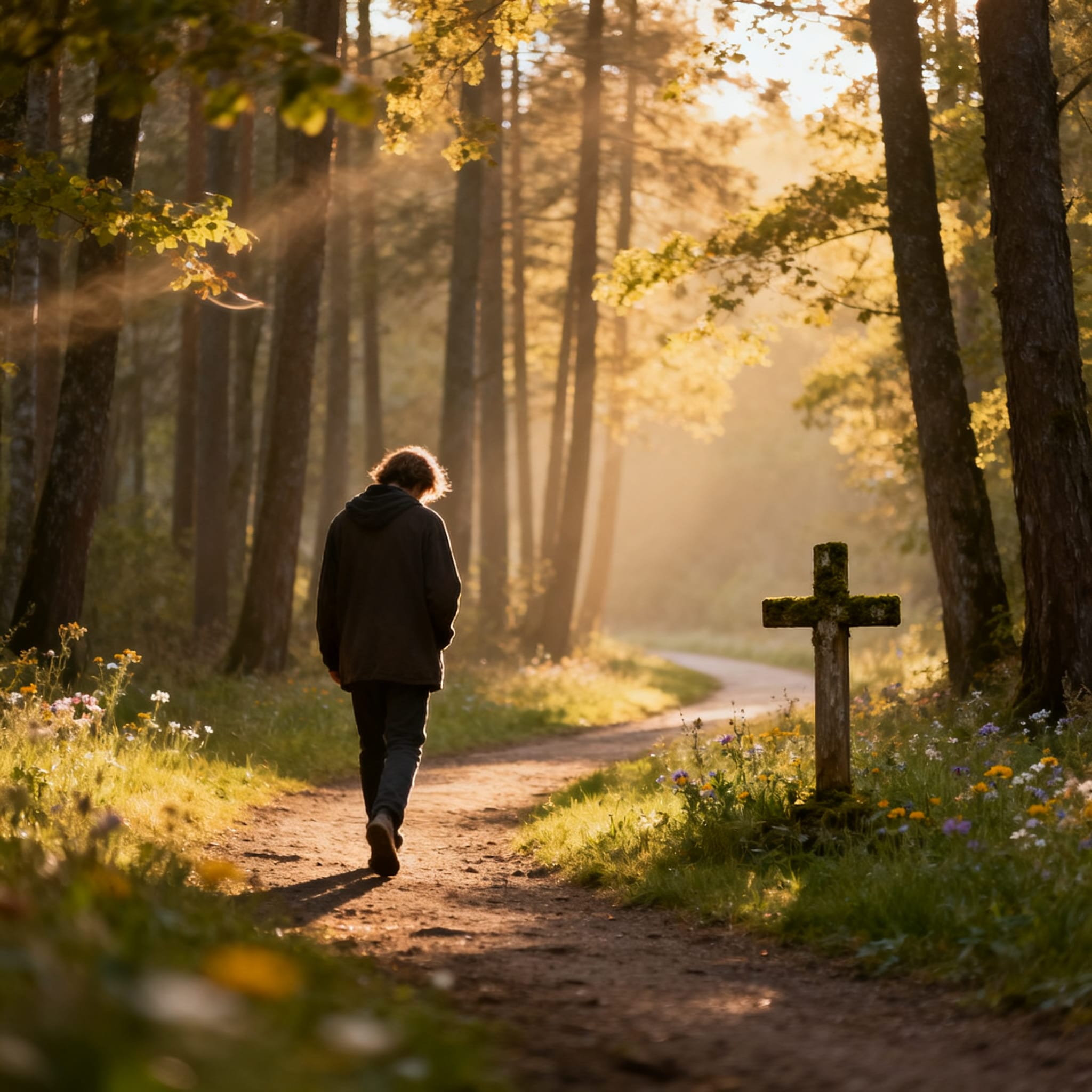
Have you ever gone through a difficult time and wondered where God was? Perhaps you prayed for something, hoped for a change, or waited for an answer that never seemed to come. Sometimes, even when we believe in God, it can be difficult to recognize His presence during painful or confusing moments.
Something similar happened to two disciples after Jesus was crucified.
In Luke 24:13–35, we read about two followers of Jesus who were walking from Jerusalem to a village called Emmaus. They were disappointed and confused because the person they believed would redeem Israel had been put to death. They had also heard reports that Jesus’ tomb was empty, but they did not understand what had happened.
As they walked and talked, Jesus Himself came alongside them. However, they did not recognize Him at first.
The experience of these two disciples gives us something to think about. We may go through ordinary days without understanding how God is guiding us. Their encounter encourages us to return to Scripture, make time for prayer, and remain open to the ways our faith can grow.
Let’s explore the Road to Emmaus story, understand its meaning, and discover how we can apply its lessons to our own faith.
What Happened on the Road to Emmaus?
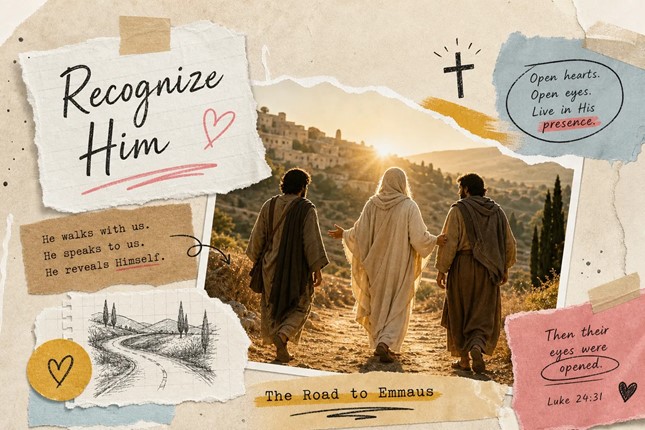
The story of the Road to Emmaus is recorded in Luke 24:13–35. It takes place on the day Jesus rose from the dead.
Two disciples were travelling from Jerusalem to Emmaus. One of them was named Cleopas. They were discussing everything that had happened during the previous days, especially Jesus’ crucifixion.
They had hoped Jesus would redeem Israel, but His death had left them confused and disappointed. Some women had visited the tomb and reported that His body was missing. They also shared that they had seen a vision of angels who said Jesus was alive.
Even after hearing these reports, the disciples were struggling to understand what had happened.
While they were talking, Jesus came near and began walking with them. But they did not recognize Him.
Jesus asked what they were discussing. Cleopas explained the events surrounding Jesus’ death and the reports from the tomb.
Jesus listened to them before explaining the Scriptures. Beginning with Moses and the Prophets, He showed them what the Scriptures said about the Messiah and why He had to suffer before entering His glory.
As they approached Emmaus, Jesus appeared to be continuing His journey. The disciples invited Him to stay with them because evening was approaching.
When they sat down to eat, Jesus took bread, blessed it, broke it, and gave it to them. At that moment, their eyes were opened, and they recognized Him. Then He disappeared from their sight.
The disciples remembered how their hearts had burned while Jesus explained the Scriptures along the road.
Instead of staying in Emmaus, they immediately returned to Jerusalem to tell the other disciples what had happened.
Their journey had started with confusion and disappointment. It ended with excitement and a renewed understanding of the risen Jesus.
Three Important Lessons from the Road to Emmaus
The encounter between Jesus and the two disciples offers lessons that remain meaningful for Christians today.
1. Jesus Meets Us During Difficult Times
The two disciples were not having an easy day. They were grieving, confused, and struggling to understand why Jesus had died.
Yet Jesus came alongside them while they were still trying to make sense of everything.
Notice that He did not wait for them to become confident or find all the answers. He met them where they were.
We can take comfort from this part of the story. There may be times when we feel disappointed, discouraged, or distant from God. We may wonder why a prayer has not been answered or why a difficult situation has not changed.
Not knowing why something is happening does not mean that God has stopped caring for us. The disciples could not understand the events surrounding Jesus’ death, yet He was walking beside them throughout their journey.
Sometimes, we need to keep walking in faith, even when the road ahead is unclear.
A thought to reflect on: What situation in your life is making it difficult to trust God right now?
2. Scripture Helps Us Understand God’s Plan
Before the disciples recognized Jesus at the table, He explained the Scriptures to them.
Luke 24:27 tells us that Jesus began with Moses and the Prophets and explained what the Scriptures said about Him.
This is an important part of the story. The disciples had heard about the empty tomb, but they did not yet understand how the events connected to God’s plan.
By explaining the Scriptures, Jesus helped the disciples connect the events they had witnessed with the promises and teachings they had known.
We can learn from this today. When life becomes confusing, it is easy to depend only on our feelings or the opinions of others. But spending time reading and understanding the Bible helps us build a stronger foundation for our faith.
We may not always find an immediate answer to every question. However, Scripture reminds us of God’s character, His promises, and the hope we have through Jesus.
If you are going through an uncertain season, take time to read the Bible, reflect on what it teaches, and bring your questions to God in prayer.
3. Jesus Reveals Himself Through Fellowship
The disciples invited Jesus to stay with them when they reached Emmaus.
During the meal, Jesus took the bread, blessed it, broke it, and gave it to them. It was then that they recognized Him.
The moment was deeply meaningful because it connected their experience with the shared meals and fellowship they had known with Jesus.
For Christians, this part of the story also points toward the importance of Communion and remembering Jesus’ sacrifice.
It reminds us that faith is not meant to be lived in isolation. Spending time with other believers, studying Scripture together, praying, and sharing meals can help strengthen our relationship with God and with one another.
We should make room for these simple moments of fellowship in our everyday lives.
A Five-Day Bible Reading Plan Based on the Road to Emmaus
If you want to understand this story more deeply, spend five days reading the passages below.
You do not need to rush through them. Read each passage carefully, think about its message, and spend a few minutes in prayer.
Day 1: The Disciples’ Journey and Their Disappointment
Read: Luke 24:13–24
Think about the two disciples and the emotions they were experiencing. Consider how disappointment can affect the way we understand God’s plans.
Reflection question: Have you ever struggled to understand why something happened despite praying for a different outcome?
Day 2: Jesus Explains the Scriptures
Read: Luke 24:25–32
Notice how Jesus helped the disciples understand what the Scriptures said about Him.
Reflection question: What can you do to make Bible reading a more meaningful part of your daily routine?
Day 3: The Disciples Recognize Jesus
Read: Luke 24:33–35
The disciples returned to Jerusalem to share what they had experienced.
Reflection question: How can you share your faith and encourage someone who may be struggling?
Day 4: God’s Word Guides Our Steps
Read: Psalm 119:105–112
Reflect on the importance of God’s Word when life feels uncertain.
Reflection question: Is there a particular Bible verse that has encouraged you during a difficult season?
Day 5: The Early Church Lives in Fellowship
Read: Acts 2:42–47
Notice how the early believers devoted themselves to teaching, fellowship, breaking bread, and prayer.
Reflection question: How can you become more involved in prayer, Bible study, and fellowship with other believers?
You can write down your thoughts in a journal each day. Even a few honest sentences can help you remember what you have learned and how you want to apply it.
Prayers Inspired by the Road to Emmaus
There are times when we know we need to pray but struggle to find the right words. The disciples’ experience gives us a helpful reminder that we can speak honestly with God.
In Luke 24:29, the disciples ask Jesus to stay with them as evening approaches.
Their words, “Stay with us,” are a simple but meaningful expression of their desire for His presence.
Here are three prayers inspired by their journey.
A Prayer for Recognizing Jesus in Everyday Life
Heavenly Father,
Thank You for staying with me even during the moments when I struggle to understand Your presence. Sometimes my worries and disappointments make it difficult to see what You are doing in my life.
Help me become more aware of Your guidance. Open my heart to understand Your Word and give me the wisdom to recognize the ways You encourage and strengthen me.
When I feel uncertain, remind me that I do not have to face every difficulty alone.
In Jesus’ name, Amen.
A Prayer for Understanding God’s Word
Dear Lord,
Thank You for giving us Your Word to guide our lives. Just as Jesus helped the disciples understand the Scriptures on the road to Emmaus, help me grow in my understanding of the Bible.
Give me patience when I read, wisdom when I reflect, and a willing heart to follow what I learn.
Help me put Your teachings into practice instead of simply reading the words.
In Jesus’ name, Amen.
A Prayer for God’s Presence During Difficult Times
Heavenly Father,
There are moments when I feel discouraged and unsure about what lies ahead. I bring my worries, questions, and disappointments before You.
Please give me strength when I feel weak and peace when my thoughts become overwhelming.
Help me trust You even when I cannot see the full picture. Stay close to me and guide me through each step.
Thank You for Your love and for the hope I have through Jesus Christ.
In Jesus’ name, Amen.
Three Questions to Reflect on During Your Own Emmaus Journey
The story of the two disciples encourages us to be honest about our struggles and reflect on our relationship with God.
You can use these questions during personal prayer, Bible study, or journaling.
- Where am I struggling right now? Think about a situation that has left you disappointed, confused, or discouraged. Be honest about what you are feeling.
- What has God been teaching me through Scripture? Think about a Bible passage, verse, or message that has encouraged you recently.
- Have I noticed God’s presence in ordinary moments? Sometimes encouragement comes through a conversation, a moment of prayer, a Bible verse, or the support of another believer.
You do not need to have perfect answers. The purpose is to make time for honest reflection and bring your thoughts before God.
How to Create an Emmaus-Style Prayer Gathering at Home
One practical way to apply the lessons of this story is to spend time with family or friends reading Scripture, praying, and sharing a meal.
You do not need a complicated plan. A simple gathering can be meaningful when everyone takes part with an open heart.
Here is one way to organize it:
Step 1: Choose a Bible passage
Begin with Luke 24:13–35. You can also choose one of the passages from the five-day reading plan.
Step 2: Read the passage together
Ask someone to read the passage aloud. Take your time and allow everyone to follow along.
Step 3: Share your thoughts
Invite each person to share something they noticed or a question they have about the passage. Listen without rushing to correct or judge one another.
Step 4: Spend time in prayer
Thank God for His Word. Pray for the needs of the people present and ask Him to help everyone apply the lesson.
Step 5: Share a simple meal
Finish by sharing a meal or spending time together. Use the opportunity to encourage one another and strengthen your relationships.
This simple practice can help families and small groups build a regular habit of Scripture reading, prayer, and fellowship.
What Is the Walk to Emmaus Christian Retreat?
The biblical Road to Emmaus story has also inspired a modern Christian renewal experience known as the Walk to Emmaus.
The Walk to Emmaus developed from the Catholic Cursillo movement, which began in Spain during the 1940s. It was later adapted for Protestant audiences through The Upper Room ministry of the United Methodist Church. The name Walk to Emmaus was adopted in 1981.
The retreat is generally organized as a three-day Christian experience focused on faith, spiritual growth, fellowship, and service.
Participants take part in talks, prayer, worship, small-group discussions, and shared meals. The purpose is to help believers reflect on their relationship with Christ and consider how they can serve others in their churches and communities.
Although the retreat is inspired by Luke 24, it is a modern Christian program rather than an event described in the Bible.
If you are interested in participating, you can contact a local church or Emmaus community to ask about upcoming weekends and registration.
You can also visit The Upper Room’s official website to learn more about the Walk to Emmaus and its communities.
Final Thoughts: Jesus Is With Us on the Journey
The two disciples began their journey to Emmaus feeling disappointed and confused. They had lost someone they loved and struggled to understand what His death meant.
But their experience changed when Jesus walked alongside them, explained the Scriptures, and shared a meal with them.
The story reminds us that we may not always recognize God’s presence immediately. Difficult circumstances can make us feel uncertain, but we can continue turning to Scripture, prayer, and fellowship as we grow in faith.
If you are going through a difficult season, take some time to read Luke 24:13–35. Think about the disciples’ journey and remember how their understanding changed along the way.
You do not have to understand everything today. Take one step at a time, keep your heart open to God’s Word, and make room for prayer.
The same story that encouraged the two disciples can remind us of the hope we have through the risen Jesus.