Quick answer: Psalm 121:1–2 is a declaration of trust in God as the ultimate source of help. The psalmist looks away from the hills—perhaps a symbol of danger or false hope—and affirms that true help comes from the Lord alone, the maker of heaven and earth. This verse invites readers to redirect their gaze when anxiety, uncertainty, or helplessness sets in.
There are moments when you’ve exhausted your options. You’ve made the calls, waited for the results, done what you could—and still, the situation sits heavy. It’s in those moments that a question surfaces, not always from a place of theology but from somewhere far more human: Where does my help come from?
Psalm 121 begins with exactly that question. And the fact that it appears in Scripture at all tells us something important—this is not a question God finds offensive. It’s one He answers.
Today’s Bible Verse
“I lift up my eyes to the mountains—where does my help come from? My help comes from the Lord, the Maker of heaven and earth.”
— Psalm 121:1–2 (NIV)
Understanding the Passage
At first glance, this verse reads almost like two separate thoughts. A question followed by its own answer. But that structure is intentional.
The psalmist lifts their eyes toward the mountains. In the ancient Near East, mountains were layered with meaning—they were sites of temples, strongholds, and sometimes places where pagan shrines were built. Looking toward the mountains could represent looking for protection, scanning the horizon for danger, or even wondering whether the gods of the high places might offer help.
The question that follows—”where does my help come from?”—isn’t a cry of despair. It reads more like a moment of deliberate recalibration. The psalmist asks the question and immediately answers it, not because the answer is obvious to everyone, but because naming it matters. Saying it out loud is itself an act of faith.
The answer is unambiguous: help comes from the Lord, the Maker of heaven and earth. That specific title—Maker of heaven and earth—is significant. It’s not simply a name for God; it’s a statement about scope. The God being appealed to is not a regional deity or a god tied to one mountain or one nation. He is the creator of all things. If He made the mountains, He is greater than the mountains. The help being offered is not limited by geography, circumstance, or the size of the problem.
Biblical Context: Who Wrote This, and Why?
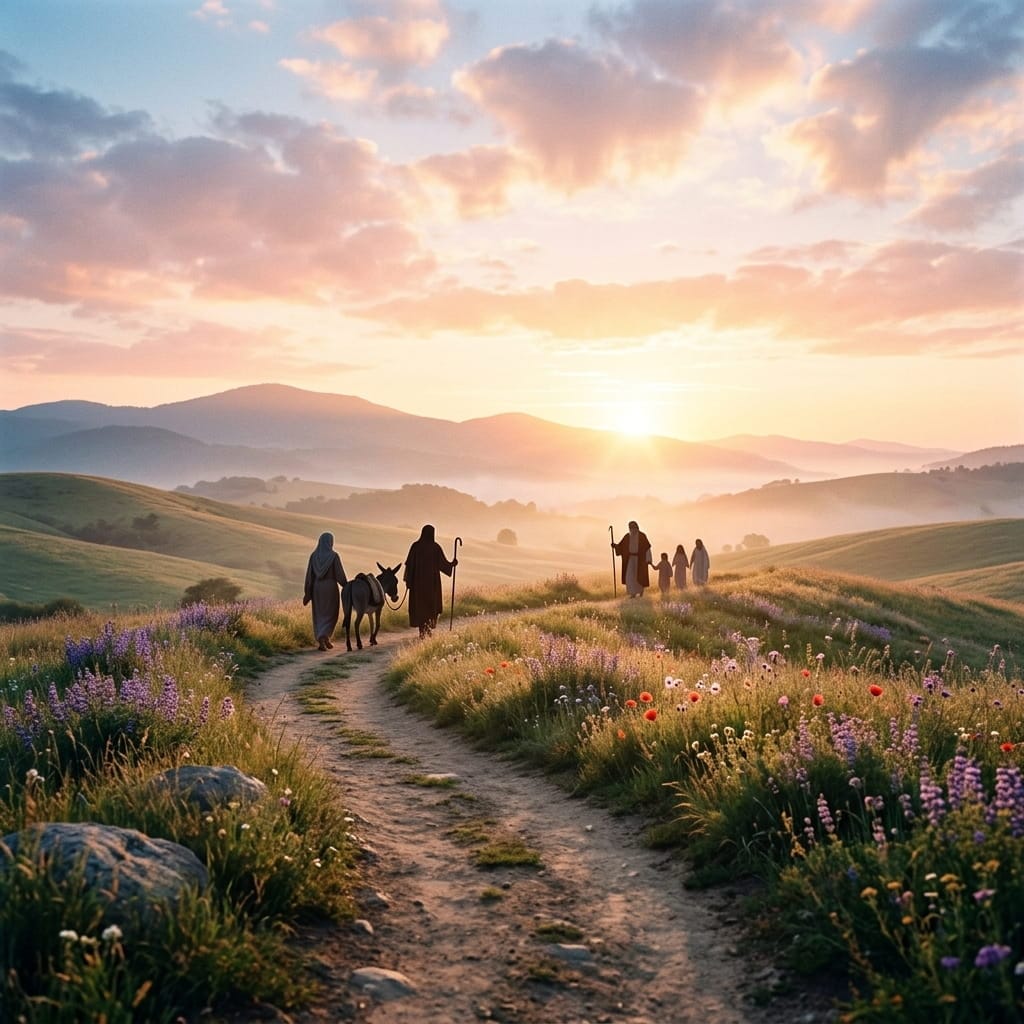
Psalm 121 is part of a collection known as the Psalms of Ascent (Psalms 120–134). These fifteen psalms were likely sung by Israelite pilgrims as they traveled to Jerusalem for the major religious festivals—Passover, Pentecost, and the Feast of Tabernacles. The journey to Jerusalem often meant climbing into the hill country of Judea, and the road was not without risk. Bandits, harsh terrain, and long distances made travel genuinely dangerous.
In that context, the act of lifting one’s eyes to the mountains takes on added weight. The pilgrim on the road might literally look ahead and see the hills—and wonder what awaits. Psalm 121 answers that anxiety not with a denial of the difficulty but with a firm reminder of who accompanies the traveler.
The psalm continues beyond verses 1–2 to elaborate on this care: the Lord does not sleep, does not let your foot slip, and watches over your coming and going both now and forevermore (Psalm 121:3–8). The opening question and answer are not isolated—they set up an entire meditation on divine watchfulness.
What This Verse Means for Us Today
The original pilgrims who sang this psalm aren’t so different from people navigating genuinely hard seasons today. The form of the journey has changed; the questions haven’t.
Consider someone waiting on a medical diagnosis. They’ve seen the specialists, read the reports, and now they wait. The instinct is to keep scanning the horizon—for more information, a second opinion, some sign of what’s coming. Psalm 121:1–2 doesn’t offer a health guarantee. What it offers is a reminder that the one who holds that person’s life is not absent, not unaware, and not outmatched by any diagnosis.
Or think of someone who has carried a difficult decision for weeks—a career change, a family situation, a relationship that has reached a crossroads. They’ve asked for advice and weighed the options, but the path forward still isn’t clear. The verse doesn’t promise an easy answer. It does invite a shift in perspective: help is available from a source that sees the whole picture.
Then there’s the quieter kind of struggle—the low-grade worry that doesn’t have a name, the sense that things are fragile, that stability is uncertain. For that person, Psalm 121:1–2 functions as a kind of anchor. Not a solution, but a truth to return to: the Lord who made everything that exists has not stopped being attentive.
A Short Reflection
There’s something honest in the way this psalm begins—with a question rather than a confident declaration. The psalmist doesn’t pretend the hills aren’t there. The uncertainty is real. But the gaze doesn’t stay fixed on the horizon. It moves.
That movement—from the hills to the Lord—is the quiet work of faith. Not a dramatic leap, just a deliberate shift in where we look for steadiness. It’s worth asking, with some regularity, where we instinctively turn when we feel out of our depth. To our own plans? To the reassurance of others? To a frantic search for control? None of those things are wrong in themselves, but they were never meant to be the source.
The Lord being described here is not distant or vague. He is personal enough to be addressed, and vast enough to be called Maker of heaven and earth. Both things are true at once. That combination—intimacy and sovereignty—is what makes this verse more than comfort. It’s a reason to trust.
Questions for Personal Reflection
- When you face situations that feel beyond your control, where do you instinctively turn first—and what does that reveal about where you’re placing your trust?
- The psalmist names God specifically as the “Maker of heaven and earth.” How does remembering the scale of who God is change the way you think about the thing you’re currently facing?
- Is there something in your life right now where you are still “looking at the hills”—searching for help in places that can’t ultimately provide it? What might it look like to redirect that gaze?
A Prayer Based on Today’s Verse
Lord, there are things I’m facing today that I don’t know how to fix. I find myself looking at the hills—at circumstances, at what could go wrong, at how much is uncertain. Help me lift my eyes past all of that and remember who You are. You are the Maker of heaven and earth. You see what I cannot see, and You hold what I cannot carry. I don’t need to have all the answers if I have You. Be my help today. Amen.
Today’s Takeaway
When anxiety pulls your attention back to the hills today, let Psalm 121:1–2 bring it back. The Lord who made heaven and earth—all of it—is the same one who is present with you in this.
Related Christian Prayer Daily Resources
If Psalm 121 has resonated with you today, you may also find encouragement in reflections on Philippians 4:6–7 (on releasing anxiety through prayer), Isaiah 41:10 (on God’s promise of presence in fear), and Psalm 46:1 (on God as a refuge and strength in times of trouble). Each of these passages extends the theme of divine help and can deepen your reflection throughout the week.